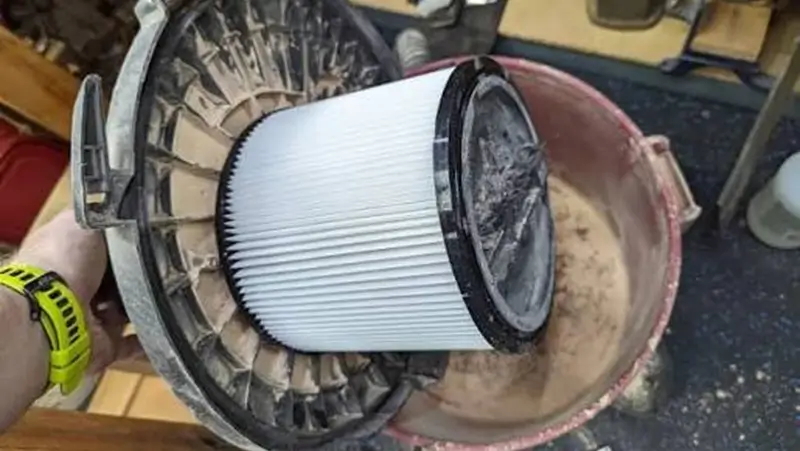
Yes, you can use some shop vacs without a filter for wet pickup, but you should not run a shop vac without a filter for normal dry vacuuming.
The filter keeps fine dust and tiny particles from reaching the motor or being blown back into your workspace.
What Happens If You Run It Without a Filter?
A shop vac can look like it is working normally without a filter because the motor still runs and the tank still collects debris.
But the filter does an important job stopping fine particles from moving beyond the collection area. Without it, dust that should stay trapped can travel through the vacuum’s airflow system.
- Fine Debris Can Reach the Motor
The collection tank is designed to catch larger debris like wood chips, leaves, dirt, and small pieces of rubble. But many common workshop materials create much finer particles that stay suspended in the airflow.
Examples include:
- Sawdust from sanding or cutting wood
- Drywall dust from renovation work
- Concrete or masonry dust
- Ash from fireplaces or stoves
- Fine dirt and powdery debris from garages
Without a filter, these tiny particles pass through the tank and get into the motor. Over time, abrasive dust builds up inside the vacuum, restricts airflow, and contributes to overheating or premature wear.
- Dust Can Be Blown Back Into the Air
The filter also helps keep your workspace clean by trapping particles before the exhaust air leaves the vacuum. Without a filter, some of the collected dust is blown back into your garage, workshop, or home.
You might see a dusty film settling on nearby surfaces or a cloud of fine particles around the shop vac when the vacuum is running.
The filter doesn’t just protect the room you’re cleaning. Its primary job is to protect the shop vac itself.
When you vacuum dry debris, use the correct filter (and, for very fine dust, a collection bag or HEPA filter) to maintain suction and give your shop vac a longer lifespan.
When It’s Safe to Skip the Filter
Running a shop vac without a filter isn’t recommended for most dry cleaning jobs, but there are situations where removing the filter is normal and even necessary.
The most common example is wet pickup, which is why many shop vacs are designed with removable filters in the first place.
Wet Pickup
With many wet/dry shop vacs, you should remove the standard cartridge filter before vacuuming water or other liquids.
Paper and pleated cartridge filters trap dry particles; they’re not designed to handle large amounts of moisture (a paper filter will become clogged and restrict airflow)
Before picking up liquids, check your owner’s manual because filter requirements vary between models.
Some shop vacs run without any kind of filter for wet pickup, while others need a foam sleeve filter to protect the motor from water droplets and debris.
The “Water as a Filter” Method
If you’ve heard about the “water as a filter” method and wonder if it’s a good way to save on the cost of replacement filters, this is how it works.
Some professionals and DIY users add a small amount of water to the bottom of the collection tank as a way to trap fine dust. The idea is that dust particles are pulled into the tank and become trapped in the water.
This method does work, but it’s a workaround rather than a replacement for a proper filter system. A shop vac is engineered to work with the correct filter, and using water as a filter can introduce other problems, including:
- Reduced airflow if too much water is added
- Dirty water residue that needs to be cleaned out
- Odors or mold growth if moisture is left sitting in the tank
- Less effective protection against extremely fine particles
Risks of Long-Term Filterless Use
Using a shop vac without a filter for a quick wet pickup job is very different from running it filterless every time you clean your garage or workshop.
Over the long term, operating without the correct filter puts extra strain on the vacuum and shortens its useful life.
1. Increased Motor Wear
The filter helps protect the vacuum’s motor from the fine particles that make their way through the collection tank. A shop vac motor is designed to move air, not process a constant stream of abrasive dust.
Fine particles can:
- Build up around the motor
- Reduce airflow through the cooling system
- Contribute to overheating
- Wear internal parts over time
The occasional missed filter is unlikely to destroy a machine instantly, but repeated filterless use will gradually shorten its working life.
2. Reduced Suction and Performance
It’s a common misconception that removing the filter makes a shop vac stronger because there’s less resistance in the airflow path.
A dirty or clogged filter will definitely reduce suction, but running without a filter creates other problems.
Dust buildup inside the vacuum restricts airflow in places you can’t easily clean. Over time, this leads to:
- Reduced suction power
- More frequent maintenance
- A vacuum that struggles with fine debris
Installing the correct filter and keeping it clean is the best way to maintain strong suction without sacrificing motor protection.
3. Potential Warranty Issues
Manufacturers design wet/dry vacuums for use with specific filter setups. If your shop vac is damaged because you didn’t use the proper filter, your warranty coverage could be void.
Accidentally forgetting a filter once won’t automatically void your warranty. But when motor failure is caused by repeated improper use, the manufacturer may consider it misuse rather than a product defect.
It can be tempting to avoid buying replacement filters because they feel like an unnecessary ongoing expense. But saving money on filters is a false economy if it means replacing the entire shop vac years earlier than expected.
What to Do Instead
Instead of removing the filter completely, choose the right combination of filter and collection method. This will give you better performance while protecting the motor.
| Type of Debris | Recommended Shop Vac Setup |
| General garage dirt, leaves, and larger debris | Standard cartridge filter |
| Wood chips and sawdust | Cartridge filter, with a collection bag for easier cleanup |
| Fine sawdust from sanding | Fine dust filter or HEPA filter, with a dust collection bag |
| Drywall dust and renovation debris | HEPA filter plus a collection bag designed for fine dust |
| Ash from fireplaces or stoves | Ash filter or HEPA-rated filter (never use a standard shop vac for hot ash) |
| Water and liquid spills | Remove the standard dry filter. Use a foam sleeve if required by the manufacturer |
How Often Should You Replace a Shop Vac Filter?
A shop vac used occasionally for sweeping up garage dirt may only need a new filter every year or two. A vacuum used regularly for woodworking, remodeling, or fine dust cleanup will need filter maintenance much more often.
Replace the Filter When It’s Damaged
Replace your filter if you notice:
- Tears, holes, or worn areas in the filter material
- A loose or damaged rubber seal
- A filter that no longer fits securely
- Permanent clogging that does not improve after cleaning
Clean Reusable Filters Regularly
Many shop vac cartridge filters are washable or designed to be cleaned rather than replaced after every use. Cleaning them regularly helps maintain suction and extends the filter’s useful life.
For reusable filters:
- Turn off and unplug the shop vac
- Remove the filter according to the manufacturer’s instructions
- Shake or tap off loose dust outdoors
- Wash the filter only if it is rated as washable
- Allow it to dry completely before reinstalling it
FAQs
Will running it without a filter void the warranty?
Not necessarily. Warranty terms vary between manufacturers, and accidentally running your shop vac without a filter once is unlikely to automatically void your coverage.
But if the manufacturer determines that motor damage was caused by using the vacuum without the correct filter, they may deny a warranty claim.
Can dust really damage the motor that fast?
It depends on the type of dust and how long you use the vacuum without a filter. Vacuuming coarse debris for a few minutes is less risky than cleaning up fine materials like drywall dust, concrete dust, or sanding dust.
These tiny abrasive particles quickly pass through the vacuum and accumulate around the motor, reducing airflow, increasing wear, and shortening its lifespan.
What’s the best all-purpose filter if I don’t want to switch often?
For most homeowners, a high-quality cartridge filter is the best all-purpose option. It handles everyday debris while providing good airflow and motor protection.
If you regularly clean up fine dust from sanding or renovation projects, upgrade to a HEPA cartridge filter, which captures smaller particles more effectively.
No single filter is ideal for every job, so you might still need a foam sleeve or a different filter setup when vacuuming liquids, depending on your shop vac model.