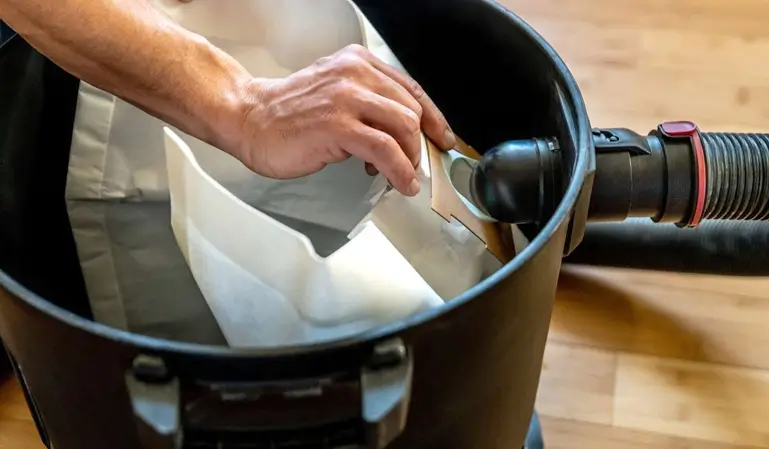
To use a shop vac as a water pump, remove the dry filter and collection bag from the vacuum.
Attach a wet foam sleeve or wet filter compatible with your model. Shop vacs with a built-in water pump can pick up water and pump it to another location.
A regular shop vac can only suck up water into its tank. The motor isn’t capable of pumping water.
Can a Shop Vac Pump Water?
You can use a wet/dry vac to remove standing water, but whether it can actually pump the water away continuously depends on the vacuum.
A regular wet/dry vac sucks water into its collection tank. You then stop the vacuum and empty the tank through the drain or tip it out.
A shop vac with a built-in water pump (or a compatible pump attachment fitted to its drain) can suck water into the tank and send it out through a garden hose, so you don’t have to keep stopping to empty a heavy tank.
That makes a pump-equipped shop vac handy for flooded basements, leaking appliances, draining a hot tub, or any other job where you’re dealing with more than a couple of gallons of water.
Check What Kind of Shop Vac You Have
There are three common setups:
- A standard wet/dry vac with a removable tank drain plug
- A wet/dry vac that accepts a separate pump attachment
- A pump vac with a water pump already built in
They don’t work the same way.
If your shop vac only has a drain at the bottom of the tank, that drain is there to make emptying the tank easier. Removing the cap and attaching a garden hose doesn’t turn it into a water pump.
Gravity can drain the tank through a hose if the end of the hose is lower than the vacuum, but it can’t push the water uphill.
Sucking up water using a regular Shop Vac with a garden hose attached to the drain outlet isn’t recommended because the vac needs a sealed tank to create suction.
If you’ve got a lot of water to move, look for a compatible pump-out accessory like the DeWalt Wet/Dry Vac External Pump or a model with a built-in water pump like the Shop-Vac 12 Gallon Pump Vac.
How to Use a Shop Vac With a Built-In Water Pump
Pump vacs collect water in the same way as an ordinary wet/dry vacuum, but a second pump moves that water from the tank to a drain or another location. The exact setup varies between models, so check your owner’s manual before starting.
1. Set the Vacuum Up for Pumping Water
Remove the disposable dust collection bag if one is installed. Paper dust bags shouldn’t be left in the machine while you’re sucking up gallons of water.
The exact filter arrangement varies between shop vacs. Some use a foam sleeve for large-volume wet pickup. Others allow certain filters to remain installed. Follow the instructions for your model.
Empty the tank before you pump water and check that the float shut-off moves freely. Some pump vacs require a wet-pickup elbow, pickup tube, or pump assembly inside the tank.
If your manual shows one, don’t leave it out. These parts help control the water entering the tank and prevent the pump or vacuum from being overwhelmed.
2. Connect a Garden Hose to the Pump Outlet
Find the water pump outlet. Don’t confuse it with the ordinary tank drain or the blower port. Attach a standard garden hose to the outlet and tighten the connection securely.
Lay the hose out before you start the pump. Make sure it isn’t kinked, crushed under a door, or curled into a knot behind the vacuum.
Put the discharge end somewhere that can safely handle the amount of water you’re removing.
And think about where the water will go next. Pumping a flooded basement onto the ground next to the foundation will only send the water into the basement again.
3. Start Picking Up Water
Connect the shop vac hose to the normal suction inlet. Start at the deeper part of the puddle and move the nozzle slowly through the water.
With a built-in pump system, water entering the tank is pumped out through the garden hose. You should see a steady discharge from the other end.
For a large puddle, a wet floor nozzle makes the job much quicker than trying to chase the water around with the crevice tool.
Safety Notes!
If possible, plug the shop vac into a properly protected outlet and switch it on. A GFCI-protected outlet is particularly important when you’re using electrical equipment around standing water.
Keep the electrical connection well away from the water you’re collecting. Never disable the float shut-off to keep collecting water. That float is there to stop liquid from reaching the motor.
Don’t walk away and leave the wet/dry vac running. A pump vac can deal with a large volume of water, but it isn’t a substitute for a permanently installed sump pump.
The Shop-Vac Pump Vac manual specifically warns against using the machine as a sump pump or leaving it unattended.
How to Use a Pump Attachment on a Regular Wet/Dry Vac
Some regular wet/dry vacs can be converted using a pump accessory that attaches to the tank drain.
This is a good option if you’ve already got a shop vac and occasionally need to clear a flooded basement or move a lot of water.
First, check compatibility. The fact that your vacuum has a drain doesn’t mean a particular pump will fit it.
Also check the pump’s limits. Maximum hose length and vertical lift vary depending on the pump model.
Pump accessories attach to the drain near the bottom of the collection tank. The pump then has its own garden-hose outlet.
A typical setup looks like this:
- Unplug and prepare the vacuum for wet pickup
- Empty and clean the tank
- Remove the tank drain cap
- Install the pump attachment according to its instructions
- Connect a garden hose to the pump outlet
- Run the garden hose to your discharge point
- Connect the vacuum hose to the suction inlet
- Turn on the vacuum and start pumping following the manufacturer’s instructions
What If Your Shop Vac Doesn’t Have a Pump?
You can still use it to get rid of standing water. You’ll just have to work in batches, and if you’re dealing with a lot of water, it will be a slow process because the tank will need frequent emptying.
Set the vacuum up for wet pickup and suck up the water normally. As the tank fills, you’ll eventually hear the sound of the vacuum change. That’s the float shut-off closing because the water has reached the maximum safe level.
Switch the machine off. If your shop vac has a tank drain, position it somewhere suitable and remove the cap.
You can use a garden hose (with a suitable adapter if needed) to gravity-drain the tank, but the hose outlet needs to be lower than the tank.
Once the tank is empty, remove the hose, close the drain, and start vacuuming again.
When a Shop Vac Is Better Than a Regular Water Pump
If you’ve got several inches of clean water covering a basement, a sump or utility pump will normally move it faster.
But a normal water pump eventually reaches the point where the water is too shallow for it to pick up.
A wet/dry vac can chase down those last puddles, suck water from uneven concrete, get into corners, and pull water from carpet.
It’s also useful when the water contains debris that water pumps aren’t designed to handle.
Don’t use a shop vac for gasoline, solvents, other flammable liquids, or anything else the manufacturer prohibits. Sewage and contaminated floodwater aren’t a routine wet-vac cleanup job either.
FAQs
Can you siphon water through a shop vac?
You can, but if a siphon will work, you don’t need to route it through the shop vac.
If the water needs to travel downhill, a normal siphon or gravity drain will do the job without running a vacuum motor at all. If it needs to travel uphill, you need a pump.
Can you use a shop vac to drain a pool?
Yes, if it’s a pump vac. You can use a normal wet/dry shop vac to remove the last few inches of water from a small pool, hot tub, or spa, but it isn’t the best tool for draining a large volume of water.
A utility or submersible pump will usually be faster. A shop vac is most useful for the shallow water left behind once a pump can no longer pick it up.
Can you attach a garden hose to a shop vac to drain water?
Sometimes, but it depends on the vacuum; some models don’t have a drain spigot.
A hose connected to a standard tank drain relies on gravity, so the end of the hose needs to be lower than the tank.
To push water uphill or discharge it continuously while vacuuming, you need a built-in pump or a compatible pump attachment.
Can you run a shop vac continuously while sucking up water?
A standard wet/dry vac needs to be stopped and emptied when the tank fills. Models with a built-in pump or pump attachment can discharge water continuously, but you should still follow the manufacturer’s operating limits and never disable the float shut-off.