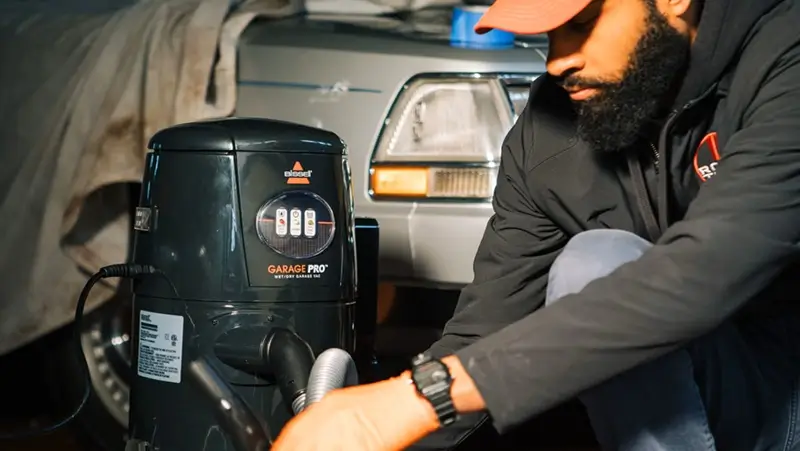
The best way to store a shop vac is to empty the tank, let it dry completely, store it upright in a clean, dry garage, and keep the hose, cord, and accessories organized.
If possible, use a wall mount or dedicated storage area to protect the vacuum from damage and make it easier to use.
Clean and Dry It Before Storing
Taking a few minutes to clean your shop vac before putting it away helps prevent odors, mold growth, and unnecessary wear.
Empty the tank and wipe the interior.
Don’t leave sawdust, drywall dust, wood shavings, or other debris sitting in the collection tank between uses.
Empty the tank into the trash, then wipe the inside with a damp cloth to remove any fine dust clinging to the walls. If you’ve picked up liquid, rinse the tank and then let it dry.
Dry the filter separately if it’s dam.p
If you’ve vacuumed liquids, let the filter air-dry before reinstalling it. Putting away a damp filter traps moisture inside the vacuum, which encourages mold and mildew.
Remove debris from the hose and attachments
Dust, wood chips, leaves, and other debris often remain inside the hose and nozzles after the tank has been emptied.
Give the hose a quick shake or blow it out with compressed air, and check that attachments are clear before storing them.
Don’t store it while it’s still wet
Even a small amount of leftover moisture inside the tank, hose, or filter provides a damp place for mold, mildew, and bacteria to grow.
Trapped moisture smells bad, leads to rust on metal components, and can shorten the life of your shop vac.
If you’ve used it for wet pickup, leave the tank and accessories open to air-dry completely before putting the vacuum away.
Best Storage Positions
How you store your shop vac affects how long it lasts and how easy it is to use the next time you need it.
The best storage position is upright, with the vacuum sitting on its wheels or mounted securely on a wall bracket designed for that specific model.
Upright on Wheels vs. Wall-Mounted Brackets
Storing the unit upright on its wheels is the simplest and safest option. The wheels keep the vacuum stable, prevent the tank from resting directly on the floor, and allow you to move it around easily while you clean.
But when floor space is limited, a wall-mounted shop vac or storage bracket is a sensible choice.
Wall-mounted models keep the vacuum off the floor, freeing up valuable garage space while making the hose and accessories easier to organize.
Many shop vacs come with built-in mounting systems that keep the unit secure and allow quick access to the hose and attachments.
If you are adding your own wall storage, check the vacuum’s manual first. Use a bracket that supports the vacuum’s weight, and fix it to suitable wall framing.
Avoid hanging standard portable shop vacs by their handles or accessories unless the manufacturer specifically approves it.
Why Upright Storage Protects the Motor
Keeping a shop vac upright keeps internal components in their intended position. Upright storage reduces the chance of dust, debris, or moisture getting into the motor or filter housing.
Why Storing Upside Down Can Deform Filters
Storing a shop vac upside down isn’t a good idea, especially for long periods. The weight of the filter can cause it to press against internal components or become misshapen.
A damaged filter causes reduced airflow and filtration the next time the shop vac is used.
Why Storing a Shop Vac on Its Side Is Not Recommended
Storing a shop vac on its side isn’t recommended for long periods because the hose, wheels, or accessories could become damaged. Most manufacturers recommend upright storage to protect internal components.
Garage Storage Solutions
The best way to store a shop vac depends on how often you use it and your available space.
The goal is to keep the vacuum accessible while preventing the hose, cord, and attachments from becoming a tangled pile in the corner of the garage.
Small Garage Storage Ideas
Wall-Mounted Vacuum
Wall-mounted shop vacs are ideal for small garages because the motor stays off the floor while hoses and attachments can be stored neatly underneath.
Mount the vacuum where the hose can reach the areas you clean most often. Keeping attachments nearby on the same mount or in a small container prevents you from having to search for nozzles and extension wands every time you need them.
Ceiling Shelf
A string overhead shelf is useful for storing a compact shop vac or keeping accessories out of the way.
Make sure the shelf is properly secured and strong enough to support the weight. A ceiling shelf is often better suited for lightweight models and accessories.
Pegboard Storage
Pegboards are a compact, inexpensive way to organize all the small parts that tend to disappear in a garage.
Hooks can hold crevice tools, brushes, extension wands, and other attachments where they are easy to see and grab hold of.
Medium Garage Storage Ideas
Rolling Cart
A rolling cart keeps the shop vac, hose, attachments, and cleaning supplies together while moving everything around the garage or workshop as needed.
For people who use their shop vac for woodworking, car cleaning, and general garage cleanup, a mobile setup is often more convenient than a fixed location.
Cabinet Storage
A garage cabinet that hides the shop vac and accessories keeps the area looking tidy. This works well if your garage doubles as a workspace where you want equipment out of sight.
Don’t store a recently used wet/dry vacuum inside an enclosed cabinet until it has dried completely, because trapped moisture will result in odors and mildew.
Shelf Storage
A strong garage shelving unit provides a simple home for smaller shop vacs and their accessories.
Store the vacuum on the lower shelf for stability, with hoses, filters, and attachments stored above or beside it in labeled bins.
Large Workshop Storage Ideas
Dedicated Cleaning Station
A cleaning station saves time and gives your shop vac a permanent home with everything needed for cleanup in one place.
This can include wall storage for hoses, shelves for attachments, a bin for replacement filters and dust bags, and a nearby power outlet.
Charging Area For Cordless Models
If you use a cordless shop vac, a charging area keeps batteries organized and ready. Store chargers away from moisture, heat sources, and areas where dust buildup is excessive.
Cord and Hose Management
Coil the Hose Correctly to Prevent Cracking
Shop vac hoses are designed to flex, but they become damaged if they’re tightly bent, crushed, or stored with sharp kinks.
When you put the hose away, make loose, wide loops rather than tight coils. Large loops help to prevent stress on the plastic ribs.
Avoid hanging a heavy hose from a single point. This can cause the hose to stretch or develop weak spots over time.
A wall hook, hose hanger, or wide storage bracket that supports several sections of the hose is a better option.
Store the Power Cord Without Damaging It
The easiest way to damage a shop vac cord is to repeatedly wrap it too tightly around the machine. Tight bends near the plug or where the cord enters the vacuum weaken the cord insulation over time.
Instead, loosely coil the cord into large loops and secure it with a hook-and-loop strap or the vacuum’s built-in cord wrap.
Don’t wrap the cord around the hose, as the two can become tangled and the weight puts unnecessary strain on both.
Keep Hoses, Cords, and Attachments Together
Use a storage bin, tool drawer, pegboard hooks, or an accessory bag to keep shop vac nozzles, brushes, filters, and adapters together.
Don’t Store Heavy Items on Top of the Hose or Cord
Prolonged pressure can deform hoses and damage cords. Keep hoses hanging freely or stored where they won’t be crushed by boxes, tools, or other garage equipment.
Climate Considerations
Exposing your shop vac to long-term temperature extremes and moisture can affect the motor, filters, hoses, and plastic components.
Most shop vacs perform best when stored and operated between 50°F and 90°F. Short periods outside this range usually won’t cause problems, but repeated exposure to extreme heat, freezing temperatures, or high humidity can shorten the life of the vacuum.
Hot Garage Conditions
A garage that regularly reaches over 90°F can create problems for your shop vac. Temperatures inside an enclosed garage can climb well above the outdoor temperature during summer, with some garages reaching 100°F to 120°F on very hot days.
High temperatures cause plastic parts, hoses, and seals to age faster. Rubber components become brittle, while plastic tanks and fittings can crack or warp.
Heat also affects batteries in cordless models, reducing battery life if they are stored in hot conditions for long periods.
Store your shop vac away from direct sunlight, heaters, furnaces, or other heat-producing equipment.
Cold Garage Conditions
Once temperatures drop below 40°F, plastic hoses and components become less flexible. Using a frozen or very cold hose and forcing it into tight bends increases the chance of cracking.
In freezing conditions below 32°F, any water left inside the tank, hose, or pump components (on models with liquid pickup features) can freeze and expand, causing damage.
If your garage regularly drops below freezing, allow the vacuum to warm up before heavy use. Store it with the tank completely dry, especially after wet pickup jobs.
Humidity and Moisture Control
Moisture creates ideal conditions for mold, mildew, and rust. A damp garage can cause musty odors in the vacuum, damage metal components, and shorten the life of filters.
If your garage is prone to condensation or high humidity, it’s a good idea to use a dehumidifier or moisture absorber to reduce excess moisture.
Avoid storing the shop vac directly on a cold concrete floor, where temperature differences encourage condensation.
A rubber mat or wooden platform will provide a barrier between the vacuum and damp surfaces.
Protect Your Shop Vac During Long-Term Storage
- Remove wet filter
- Leave the tank completely dry
- Store indoors if possible
- Keep pests out
- Check before first use
FAQs
Can you store a shop vac outside?
It’s not recommended. Outdoor storage exposes it to rain, humidity, temperature swings, dust, and insects.
Moisture can damage the filter, encourage mold growth, and lead to rust on metal components, while exposure to prolonged sunlight makes plastic parts brittle over time.
If you have to store your shop vac outside temporarily, keep it in a weatherproof storage box or shed and make sure it’s completely clean and dry first.
Should you store it with the lid on or off?
Store your shop vac fully assembled with the lid secured on the tank. This helps keep dust, insects, and debris out of the collection drum.
The only exception is when the vacuum is still damp after cleaning or wet pickup. Leave the lid off until the tank, hose, and filter have dried completely.
Once everything is dry, reassemble the vacuum before putting it into storage.
How often should you clean it during storage periods?
If you clean your shop vac before putting it away for storage, the only maintenance check you need to carry out is on the filter.
Check it every 3 months to make sure insects haven’t eaten holes in the paper and moisture hasn’t allowed mold to grow.