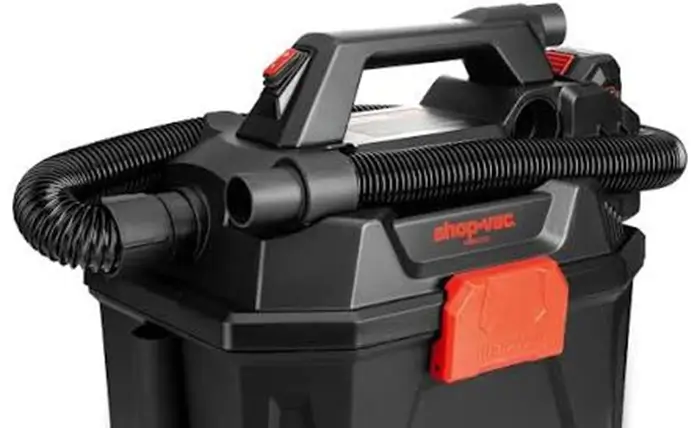
The most common reasons you’ll see water blowing out of your wet vac are a full tank, a stuck float that doesn’t shut the suction off, the wrong filter, or foam buildup inside the tank.
A missing elbow inside the tank where the hose connects could also be causing your problem.
Sometimes the elbow is pointing the wrong way (upwards instead of sideways or downward). If so, the water you’re sucking up will be thrown toward the motor instead of down into the tank.
Seeing a little mist usually points to a filter issue, which is a quick fix and nothing to be alarmed about. But if you’re seeing water spraying out, then it’s time to investigate and troubleshoot the problem.
Why Is My Wet Vac Blowing Out Water?
A wet vac is supposed to separate the water from the air.
The water drops into the tank. The air carries on through the vacuum and comes out of the exhaust.
When the tank gets full, the ball float rises. That cuts off the suction, and you’ll hear the noise your vacuum makes change.
If the float is stuck or broken, or the water in the tank gets too high for some other reason, water gets pulled up toward the motor and blown out the exhaust.
Wet Vac Blowing Water Troubleshooting Steps
1. Empty the Tank
Unclip the top of the wet vac and look inside the tank. If the tank is full or close to full, empty the water out, put the top back on, and try sucking up water again.
If the exhaust is only blowing air now, you’ve found the source of the problem. In the future, don’t wait too long before emptying the tank. When your vacuum starts to make a different noise, that’s the signal telling you to empty it.
But if water starts coming out again even though the tank is mostly empty, the float is the next thing you’ll need to look at.
2. Check the Float
Take the top off the wet vac and turn it over so you can see the motor head. You should see something that looks like a plastic ball or cup inside a cage. That’s the float.
It should move freely, so give it a gentle push to make sure it isn’t stuck. If it doesn’t move, clean away any mud, hair, or other gunk that could be jamming it.
Make sure the float isn’t cracked or damaged.
The float is the only mechanism that tells the wet vac to stop pulling in water. As the water level rises, the float rises too. When it reaches the maximum safe water level, it blocks the suction opening.
If it can’t move, the tank fills past the safe level, and that’s the reason the exhaust will spray dirty water all over the place.
3. Make Sure You Have the Right Filter Setup
Wet vacs don’t all use the same filter arrangement for water.
Some need the normal dry filter removed. Some use a foam sleeve. Some models allow a particular filter to stay in place.
Read the instruction manual that came with your wet vac to find out which filter setup you should be using. If you’ve lost your instructions, look up the manual online.
4. Are You Vacuuming Soapy Water?
If you’ve been cleaning up things like carpet shampoo, detergent, floor cleaner, or anything else that makes a lot of suds, your tank is probably full of foam even though there isn’t much water in it.
Foamy bubbles take up a lot of space inside the tank, rising far above the actual water level. Foam won’t activate the float. Instead, the foam will get pushed out of the exhaust as a watery splatter.
When you’re cleaning up soapy water, empty the wet vac more often. You should also check your owner’s manual because some wet vac models aren’t designed to handle very foamy cleanup jobs.
5. Check the Elbow or Deflector Inside the Tank
With the top off your wet vac, look at where the hose enters the tank. Most wet vacs have a plastic elbow fitted on the inside that points the incoming water downward.
If it’s missing, the water coming through the hose can spray across the tank or upward toward the motor. This is an easy thing to miss, especially with a secondhand wet vac.
Make sure the elbow is pointing toward the bottom of the tank. If you don’t see an elbow, check the parts diagram in your owner’s manual to see if your vac uses one and to find out how to get a replacement.
6. Keep the Wet Vac Upright
A half-full wet vac can still cause trouble if it isn’t on level ground. Pulling the machine over a doorstep, using it on a sloping driveway, dragging it by the hose, or working on stairs can all make the water inside slosh around and reach the top of the tank.
Keep the vac upright as much as you can. If you have to put the vac somewhere uneven, empty the tank more often.
7. Put the Vac Back Together Properly
Whenever you take your wet vac apart to clean it or change the filter, make sure everything has gone back where it belongs.
Before you put the top back on the tank, wipe off any dirt sitting around the rims of the lid and tank. Mud and grit can stop the top from sitting properly and affect airflow and suction.
Check the latches for dirt as well.
What If Water Reached the Motor?
If a lot of water came out of the exhaust, stop using the vac, unplug it, and empty the tank.
If the motor sounded strange, you smelled burning or an electrical smell, you saw sparks, or the vac tripped a breaker or GFCI outlet, leave it unplugged.
Check the instructions for your model. If water reached electrical parts inside the motor head, the wet vac will need to dry completely or be inspected by a repair shop before you use it again.
Be safe. Faulty electrical equipment is dangerous. If you still have a wet mess to clean up, grab a mop and bucket or a roll of paper towels.
What To Do If The Wet Vac Still Blows Water?
If you’ve gone through the basic troubleshooting steps and your wet vac is still blowing water out the back, the float assembly or motor head could be damaged.
Check your warranty to find out if you can get a free repair or replacement. Otherwise, take the vac to a local repair shop and let a professional fix the problem.
FAQs
Is a Little Water From the Exhaust Normal?
A fine mist coming from the exhaust is usually due to using the wrong kind of filter for wet pickup. It’s not a major cause for concern, but you should check your manual and make sure you’re using the right filter the next time you clean up water.
A steady spray of water isn’t normal, though. Switch the vac off and check the tank water level and float first. Then check the filter and inlet deflector.
Why does my wet vac stop sucking when the tank fills?
That’s usually the float doing its job. As the water level rises, the float rises with it. Once the tank reaches its safe fill level, the float blocks the suction opening.
You usually hear the motor noise change when this happens. Switch the wet vac off and empty the tank before you carry on.
Can I use a wet vac without a filter for water?
It depends on the model.
Some wet vacs are designed to pick up water with the dry cartridge filter removed. Others need a foam filter or another wet-use filter.
Check the manual for your wet vac to find out which filter you should use.