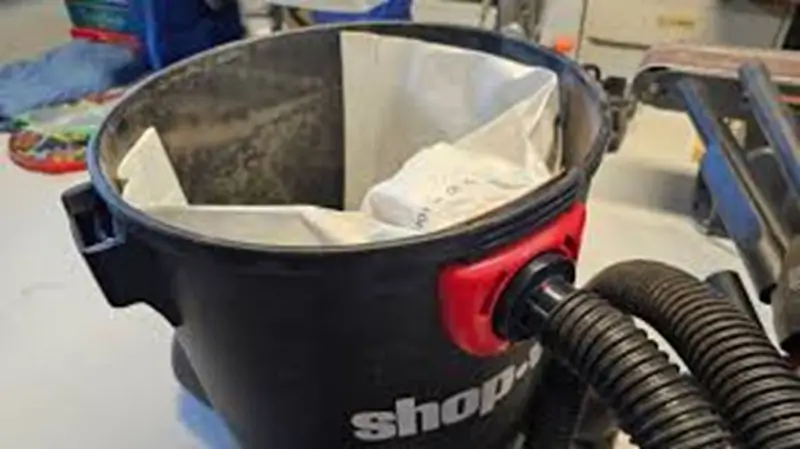
Yes, you can use most shop vacs without a bag. Many wet/dry vacuums are designed to operate bagless, with dirt, dust, and debris collecting directly in the tank while the filter protects the motor.
Using a shop vac without a bag isn’t always the best option, though. A disposable collection bag makes cleanup much easier, reduces dust exposure when emptying the tank, and helps prevent the filter from clogging quickly when vacuuming dusty materials.
How Bagless Operation Works
Without a bag, all the dirt and debris travel through the hose and drop directly into the collection tank.
Air continues moving through the shop vac, passing through the filter before exiting the machine. The filter traps the fine dust that would otherwise reach the motor, helping protect it from damage.
Without a collection bag acting as a first line of defense, the filter has to catch more of the fine particles itself.
Materials like sawdust, drywall dust, and concrete dust coat the filter quickly, reducing airflow and suction.
Manufacturers recommend using a disposable bag for dusty jobs. Using a bag helps maintain strong suction, extend filter life, and makes disposal less messy.
Pros of Going Bagless
Using a shop vac without a bag is a simple and economical option. Most wet/dry vacuums are designed to operate this way, making bagless cleanup ideal for everyday garage, workshop, and household tasks.
1. Save Money on Replacement Bags
The biggest advantage of going bagless is the ongoing cost savings. Since you’re not buying disposable collection bags, you can vacuum as often as needed without worrying about replacing supplies.
If you mainly clean up larger debris like wood shavings, leaves, dirt, or general workshop messes, there’s often little benefit to using a bag.
2. Best for Wet Pickup
Disposable paper bags aren’t designed for wet pickup and can tear, collapse, or become clogged when soaked.
Running the vacuum bagless allows liquids to collect directly in the tank, making wet cleanup much more effective.
3. Full Use of the Tank Capacity
Without a bag taking up space inside the tank, you can use the vacuum’s full collection capacity.
This is a big benefit when you’re cleaning up bulky debris like leaves, insulation offcuts, wood chips, or renovation waste, allowing you to work longer before stopping to empty the tank.
4. Convenient for Everyday Cleanup
For routine cleaning, shop vac bagless operation is quick and hassle-free. You don’t have to keep spare bags on hand or stop a project because you’ve run out.
As long as the filter is clean and installed correctly, most everyday cleanup jobs don’t need a collection bag.
Cons of Going Bagless
While it’s perfectly fine to use a shop vac without a bag for many cleanup jobs, you’ll face some extra mess when emptying the tank and will need to clean or replace the filter more frequently.
1. Messy to Empty
Without a disposable bag, all of the collected debris is loose inside the tank. Emptying it can release a cloud of dust, especially if you’ve been vacuuming fine materials like sawdust or drywall dust. The tank also needs wiping out after emptying if dirt sticks to the sides.
2. More Dust Exposure
Fine dust inside the tank becomes airborne when you remove the lid or tip the contents into a trash can. If you’ve been cleaning up materials that produce lots of dust, empty the vacuum outdoors and wear a dust mask to reduce your exposure.
3. Filters Clog Faster
When you run a shop vac without a bag, the filter has to capture nearly all of the fine dust that passes through the vacuum. Over time, this buildup will restrict airflow, reduce suction, and make the motor work harder.
4. More Frequent Filter Maintenance
Because the filter is doing all of the work, you’ll need to inspect and clean it more often than if you were using a bag.
If you regularly vacuum fine dust, using a disposable bag will extend the life of the filter and maintain stronger suction.
When You Should Use a Bag
A bag in your shop vac acts as a pre-filter, catching much of the dust and debris before it reaches the main filter. This reduces maintenance, improves cleanup, and makes disposal much easier.
Use a Bag for Fine Dust
The biggest reason to use a bag is when you’re cleaning up large amounts of fine dust. Otherwise, the tiny dust particles quickly coat the cartridge filter, reducing airflow and forcing you to stop and clean the filter more often.
Use a collection bag for jobs like:
- Drywall dust from sanding or renovation work
- Fine sawdust from woodworking
- Concrete or masonry dust
- Sand and other powdery materials
- General home improvement cleanup
Use a Bag When You Want Easier Disposal
A disposable bag makes cleanup easy. Instead of lifting a heavy tank full of dusty debris and tipping it into a bin, you just remove the sealed bag and throw it away.
Use a bag in your shop vac when you clean inside your home, work in a finished room, or pick up powdery materials you don’t want to disturb after vacuuming.
Go Bagless for Wet Pickup and Large Debris
For wet pickup, the water collects directly in the tank; you don’t need a bag. A bagless setup is also better for leaves, dirt, wood chips, nails, and general mess.
Choose based on the job. Use your shop vac without a bag for quick, messy cleanup, but add a collection bag when controlling fine dust and keeping your filter clean are the priorities.
How to Empty a Bagless Shop Vac Properly
Emptying a bagless shop vac the wrong way will send dust back into the air and create another cleanup job.
The safest method depends on what you’ve been vacuuming. A tank full of leaves and garage debris is much easier to handle than one containing fine sawdust or drywall dust.
Follow these steps to empty your shop vac safely:
- Turn Off and Unplug the Vacuum
Before opening the tank, switch off the vacuum and disconnect it from the power source.
- Remove the Motor Head Carefully
Release the clamps and lift off the top section of the vacuum. Try not to shake or bang the unit, because this will disturb the debris inside and send fine dust into the air.
- Empty the Tank
For larger debris, tip the collection tank into a trash can or bag. For fine dust, empty the tank into an outdoor bin if possible.
If the tank contains drywall dust, ash, or other fine particles, wear a dust mask and avoid creating a cloud of dust while tipping the contents out.
- Check the Filter
After vacuuming dry materials, inspect the filter after emptying the tank. A heavily coated filter reduces suction and will need cleaning before your next job. Hold the filter over an outdoor trash bin and knock gently to release the dust.
- Clean and Reassemble
Once the tank is empty:
- Wipe out any remaining debris if needed
- Make sure the filter is correctly installed.
- If the tank or filter is wet, let it air-dry before clipping the top back on
A few minutes of maintenance after each use helps your bagless shop vac maintain strong suction and keep working efficiently.
FAQs
Does removing the bag affect suction power?
Removing the bag from a shop vac doesn’t increase or decrease suction power. The vacuum motor and airflow design determine the suction performance, not whether a collection bag is installed.
A bag does help maintain strong suction over longer periods because it captures a lot of the dust before it reaches the filter, stopping the filter from getting clogged as quickly. A dirty filter restricts airflow and makes the vacuum lose suction.
Can you use a shop vac without a bag or a filter?
While many shop vacs can operate without a collection bag, the filter is a different component and is usually essential.
The bag collects debris, but the filter protects the motor by trapping fine particles that would otherwise pass through the vacuum. Running a shop vac without a filter allows dust to reach the motor, causing damage and shortening the machine’s life.
Always check the manufacturer’s instructions before removing or changing the filter setup.
What’s the difference between the filter and the bag?
The collection bag holds the dirt and debris picked up by the vacuum. It acts as a pre-filter by catching much of the dust before it reaches the main filter. It also makes emptying the vacuum cleaner less dusty.
The filter protects the vacuum’s motor by trapping fine particles that would otherwise bypass the collection system. Even with a bag, the filter is still needed for most dry vacuuming jobs.